
Treasuries Top $30 Trillion Ahead of FOMC Decision
December 8, 2025
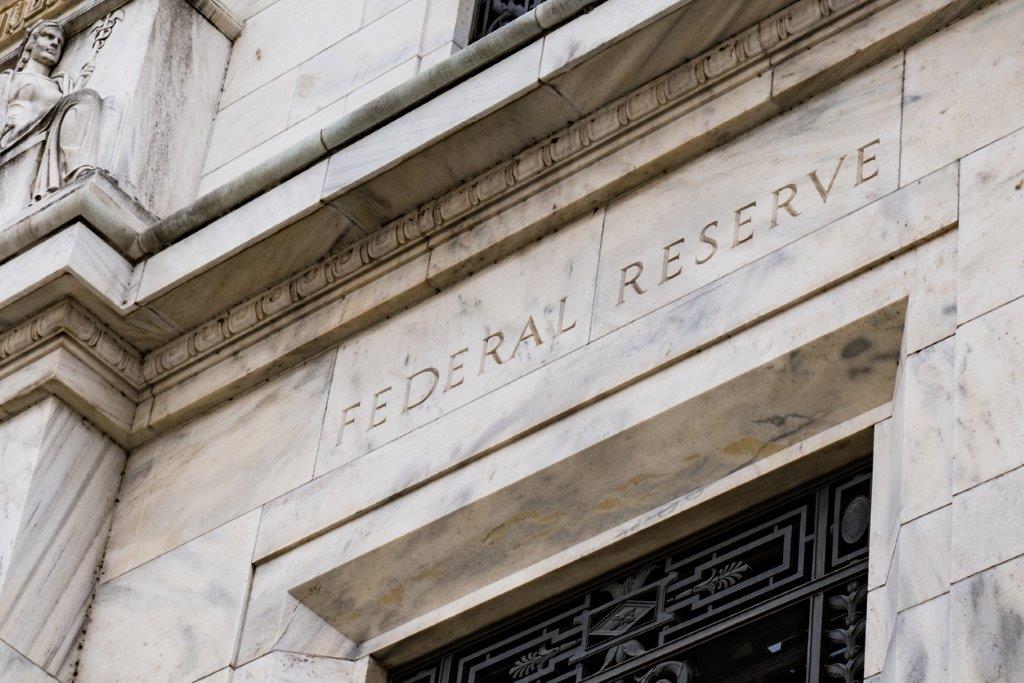
Treasuries finished with their worst week since June as we head for the Federal Open Market Committee (FOMC) rate decision this Wednesday.1 The 30-year Treasury was down by over 2% for the week, finishing 13 basis points (bps) higher at 4.79%.2 U.S. equities, meanwhile, closed near the highs of the year.3 The S&P 500 Index is up over 18% year-to-date, driven by strength in artificial intelligence (AI), industrials and commodities.4 September’s Personal Consumption Expenditures (PCE) inflation report met expectations, and core PCE prices rose 0.2% month over month.5 Inflation remains above the Federal Reserve’s (Fed) 2% target but has been steady.
Last week, investors expressed their views on big growth and reflation, as was observed in stocks, commodities and the bond market. The additional supply in U.S. Treasuries weighed on rates as U.S. Treasuries topped $30 trillion outstanding for the first time ever.6 On Friday, Netflix announced its acquisition of Warner Bros. Discovery Inc. for nearly $83 billion, although Paramount does not appear to be going away quietly, leaving the outcome uncertain.7 As the financing is contemplated today, the committed bridge loan from Wall Street to Netflix marks the largest ever investment-grade bridge loan from a single bank (Wells Fargo) at $29.5 billion.8 Perhaps this is a sign of banks’ willingness for more mergers in 2026.
It’s a big week ahead and will likely set the stage for how markets conclude 2025. Wednesday brings the main event with the FOMC rate decision, widely expected to result in a 25-basis-point cut, accompanied by a hawkish tone during the press conference.9 Also on Wednesday, Oracle will report earnings after the close.10 Investors will pay close attention to the implications for hyperscalers and the sentiment surrounding AI for 2026 and beyond. Aside from Wednesday’s main events, the Job Openings and Labor Turnover Survey (JOLTS) released on Tuesday will be critical as the Fed continues to operate in the data fog.11
Sources:
1-6, 10Bloomberg
7NBC News – Netflix agrees to buy Warner Bros. and HBO Max, creating streaming titan; 12/5/25
8Yahoo! Finance – Netflix’s $59 Billion Loan for Warner Bros. Among Biggest Ever; 12/5/25
9, 11MarketWatch – U.S. Economic Calendar; as of 12/8/25
This blog post is for informational use only. The views expressed are those of the author(s), and do not necessarily reflect the views of Penn Mutual Asset Management. This material is not intended to be relied upon as a forecast, research or investment advice, and it is not a recommendation, offer or solicitation to buy or sell any securities or to adopt any investment strategy.
Any statements about financial and company performance of The Penn Mutual Life Insurance Company or its insurance subsidiaries (each, “Client”) made by the author is provided with a written consent from the Client. Penn Mutual Asset Management is a wholly owned subsidiary of The Penn Mutual Life Insurance Company.
Opinions and statements of financial market trends that are based on current market conditions constitute judgment of the author and are subject to change without notice. The information and opinions contained in this material are derived from sources deemed to be reliable but should not be assumed to be accurate or complete. Statements that reflect projections or expectations of future financial or economic performance of the markets may be considered forward-looking statements. Actual results may differ significantly. Any forecasts contained in this material are based on various estimates and assumptions, and there can be no assurance that such estimates or assumptions will prove accurate.
Investing involves risk, including possible loss of principal. Past performance is no guarantee of future results. All information referenced in preparation of this material has been obtained from sources believed to be reliable, but accuracy and completeness are not guaranteed. There is no representation or warranty as to the accuracy of the information and Penn Mutual Asset Management shall have no liability for decisions based upon such information.
High-Yield bonds are subject to greater fluctuations in value and risk of loss of income and principal. Investing in higher yielding, lower rated corporate bonds have a greater risk of price fluctuations and loss of principal and income than U.S. Treasury bonds and bills. Government securities offer a higher degree of safety and are guaranteed as to the timely payment of principal and interest if held to maturity.
All trademarks are the property of their respective owners. This material may not be reproduced in whole or in part in any form, or referred to in any other publication, without express written permission.