President Trump Announces Nominee for Next Fed Chair
February 2, 2026
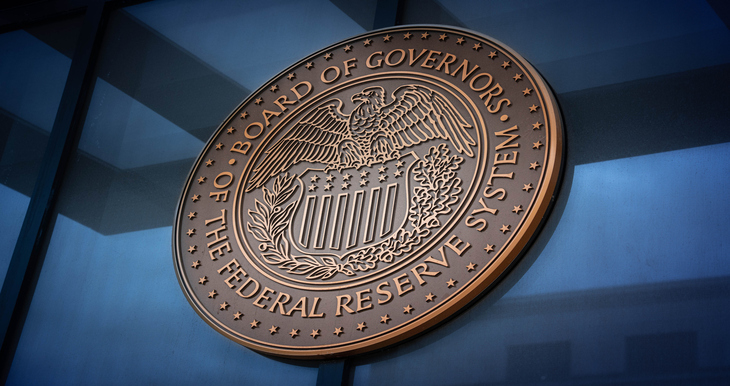
Last Friday, President Trump nominated Kevin Warsh to succeed Federal Reserve (Fed) Chair Jerome Powell in May this year,1 concluding an eventful first month of 2026 for financial markets. While Warsh is seen as a viable candidate to lead the Fed, his path through Senate confirmation faces obstacles. Members of the Senate Banking Committee have signaled they prefer to see the Department of Justice’s investigation into Chair Powell resolved before proceeding with the confirmation process for Warsh.
Last week marked the first Federal Open Market Committee (FOMC) meeting of the year. Policymakers left interest rates unchanged for the first time since July and struck a hawkish tone with a more constructive view on economic activity and labor market conditions.2 On the corporate front, mega-cap companies Microsoft (MSFT), Apple (AAPL) and Meta Platforms (META) reported earnings, with all three continuing to invest heavily in artificial intelligence (AI) infrastructure. January concluded with strong performance across risk assets. Major U.S. equity indices ended the month in the green.3 In fixed income, high-grade corporates, mortgage-backed securities and high-yield corporates each generated positive total and excess returns.4
The coming week features several key U.S. economic data releases, including the Institute of Supply Management (ISM) Manufacturing and Services Indices, the Job Openings and Labor Turnover Survey (JOLTS) and the non-farm payroll report.5 In corporate earnings, reports from mega-cap companies Alphabet (GOOGL) and Amazon (AMZN) will be key highlights.6
Sources:
1The Wall Street Journal – Trump Picks Kevin Warsh as Fed Chair; 1/30/26
2The Wall Street Journal – Fed Holds Rates Steady for First Time Since July; 1/28/26
3,4,6Bloomberg
5MarketWatch – Economic Calendar; as of 2/2/2026
This blog post is for informational use only. The views expressed are those of the author(s), and do not necessarily reflect the views of Penn Mutual Asset Management. This material is not intended to be relied upon as a forecast, research or investment advice, and it is not a recommendation, offer or solicitation to buy or sell any securities or to adopt any investment strategy.
Any statements about financial and company performance of The Penn Mutual Life Insurance Company or its insurance subsidiaries (each, “Client”) made by the author is provided with a written consent from the Client. Penn Mutual Asset Management is a wholly owned subsidiary of The Penn Mutual Life Insurance Company.
Opinions and statements of financial market trends that are based on current market conditions constitute judgment of the author and are subject to change without notice. The information and opinions contained in this material are derived from sources deemed to be reliable but should not be assumed to be accurate or complete. Statements that reflect projections or expectations of future financial or economic performance of the markets may be considered forward-looking statements. Actual results may differ significantly. Any forecasts contained in this material are based on various estimates and assumptions, and there can be no assurance that such estimates or assumptions will prove accurate.
Investing involves risk, including possible loss of principal. Past performance is no guarantee of future results. All information referenced in preparation of this material has been obtained from sources believed to be reliable, but accuracy and completeness are not guaranteed. There is no representation or warranty as to the accuracy of the information and Penn Mutual Asset Management shall have no liability for decisions based upon such information.
High-Yield bonds are subject to greater fluctuations in value and risk of loss of income and principal. Investing in higher yielding, lower rated corporate bonds have a greater risk of price fluctuations and loss of principal and income than U.S. Treasury bonds and bills. Government securities offer a higher degree of safety and are guaranteed as to the timely payment of principal and interest if held to maturity.
All trademarks are the property of their respective owners. This material may not be reproduced in whole or in part in any form, or referred to in any other publication, without express written permission.